Damaged Hair Treatment at Home: How to Repair Hair Without a Salon
At Nexxus® we know that great hair and style performance starts at the structural level.
The best at-home repair routines combine bond support, protein reinforcement, moisture balance and daily protection into a system that compounds over time. Hair repair is cumulative. While no treatment can instantly erase severe damage, consistent routines can help improve elasticity, reduce breakage, smooth roughness and make hair noticeably easier to manage.
Because hair is made up of more than 90% protein, repairing damage requires more than surface-level conditioning alone. A repair routine should help support the cuticle on the outside while reinforcing weakened areas deeper within the hair fiber.
Since 1979, Nexxus® has approached hair not only as a cosmetic canvas, but also a complex structural fiber. Via proteomic fingerprinting, Nexxus® scientists can identify exactly which proteins have been depleted — and formulate products to replenish precisely those. This is the protein science behind powerful hair. And it starts at home by layering high-quality products that have a specific role to play in repairing damage.
1. Shampoos cleanse and help remove build-up without over-stripping the cuticle for a healthy base, preparing hair for delivery of 'repair actives' — the active ingredients that do the work.
2. Conditioners help reinforce softness and flexibility on the cuticle. Advanced Bond Repair Conditioners, such as Nexxus Keraphix™, also repair bonds in the inner cortex.
3. Deep conditioning masks provide more intensive nourishment for rough and brittle areas.
4. Nexxus Keraphix™ Liquid Crystallizer Leave-In Treatment delivers next-generation bond repair and reconstruction from the inner cortex to outer layers.
5. Leave-in conditioning and heat protectants treatments help protect hair from damage.
What Are the Signs of Damaged Hair?
Damaged hair often shows both visible and structural changes. Some signs are structural: weakened elasticity, increased porosity, strands that snap where they once stretched. Others are sensory: a roughness that conditioning cannot smooth, a dullness that styling cannot fix, a persistent frizz that returns within hours of washing. All of them point to the same underlying issue — protein and bond disruption inside the hair fiber.
How to tell if your hair needs repair
Common signs of damage can include:
- Split ends that continue traveling up the strand
- Increased breakage during brushing or styling
- Dryness that does not improve after conditioning
- Dullness and reduced shine
- Frizz and rough texture
- Hair that stretches excessively when wet
- Loss of elasticity or bounce
- Tangling and poor manageability
Split ends, for example, happen when the cuticle layers along the strand begin to fray and separate. While trimming is the fastest way to remove them, targeted repair systems can help smooth weakened areas temporarily and reduce further splitting.
Elasticity is another major indicator. Healthy hair should stretch slightly and return to shape. Hair that snaps easily or feels overly stretchy and doesn't return to its original length often signals that internal bonds and proteins have been compromised. Similarly, increased tangling can happen when lifted cuticle cells no longer sit flat against the hair shaft, creating more friction between strands.
What Causes Hair Damage?
The moment hair is brushed, heat-styled, colored, or exposed to the elements, its protein structure begins to shift. At a molecular level, this means two things: essential amino acids are lost and disulfide bonds are disrupted. These bonds are responsible for how hair moves, holds shape and reflects light. When they break down and are damaged, you feel it — in the frizz, the brittleness, the dullness and the strands left behind on your brush.
Visible hair damage falls into five categories: chemical, heat, mechanical, environmental, and protein-related damage. Each affects the hair fiber differently, which is why effective repair routines should address both moisture loss and structural weakening.
Understanding the five main types of hair damage
Different types of stress affect the cuticle and cortex in different ways, gradually weakening the hair’s ability to retain moisture, maintain elasticity and resist breakage. Since 1979, Nexxus has approached hair at its deepest structural level — using advanced proteomics (study of hair’s protein structure) to decode exactly what damage does to the hair fiber and to engineer formulas that fortify and reinforce hair’s structural integrity. We don't guess. We fingerprint. With proteomic analysis, our scientists identify which nutrients have been depleted by damage type, then source ingredients that replenish and restore hair protein for overall structural integrity.
Chemical damage: Bleaching, coloring, relaxers and chlorine exposure can lift and weaken the cuticle, making hair more porous and vulnerable to protein loss. Repeated chemical processing often leaves hair brittle, rough and increasingly prone to breakage. Darker hair that undergoes aggressive lightening can experience even more stress because bleaching agents often need longer processing times.
Color Damage: Every coloring service — from subtle toning to full bleach — alters the hair's architecture. The cuticle is lifted, the natural pigment broken down and new color molecules introduced. Repeated coloring compounds the structural impact: cuticle integrity weakens, protein is disrupted and hair can become limp, stringy, or prone to breakage.
Heat damage: Flat irons, curling tools and blow dryers can erode the protective cuticle over time. High temperatures also evaporate water molecules inside the cortex, including moisture that’s bound to keratin proteins and help support the hair’s structure. The result is often dryness, frizz, dullness and reduced elasticity.
Mechanical damage: Tight hairstyles, aggressive towel drying, rough brushing and excessive detangling can all create repeated friction and tension on the fiber. Wet hair is especially vulnerable because it stretches more easily, increasing the risk of snapping and mid-shaft breakage. This leads to premature breakage, where you see more hair in your brush, fraying, frizz, and flyaways.
Environmental damage: UV exposure, pollution and hard water can all interfere with hair’s protein through oxidative stress. When the protein is disrupted in this way, hair loses moisture more easily and can start feeling rough, dry or faded.
The Best At-Home Hair Repair Treatments
Advanced at-home systems can help support visibly damaged hair when used consistently as part of a structured repair routine. The most effective routines usually combine cleansing, deep conditioning, bond-building and protective steps to provide a holistic restoration of the hair.
Can you repair damaged hair without going to a salon?
Yes, advanced at-home treatments can help visibly improve damaged hair with consistent use. While severely compromised hair may still require trims or professional intervention in some cases, modern repair systems can help reinforce weakened fibers while improving softness, smoothness, and manageability.
The key difference is consistency. Hair repair is cumulative. Repeated support for weakened proteins, moisture balance and bond integrity helps hair gradually become more resilient and less prone to ongoing breakage and everyday damage.
The Nexxus Keraphix™ Damage Repair system, consisting of Shampoo, Conditioner, Treatment Mask and Liquid Crystallizer Reconstructive Leave-In Treatment, is powered by KRT KERATIN RESISTANCE THERAPY with serine amino acid, reconstructing weakened bonds from cuticle to cortex. In one use, hair can become 34x stronger (vs. non-conditioning shampoo) and with repeated use, this system can restore bonds for hair as strong as virgin (*Based on technical study comparing treated bleached vs untreated virgin after 10 uses.)
Nexxus Creative Director, Stylist and Trichologist, Kevin Mancuso calls Keraphix his “ultimate rescue” for hair that feels beyond hope.
“From the first wash, there’s this incredible shift. The shampoo cushions and protects hair to reduce tangles, and your fingers just glide through. The conditioner transforms the roughest, driest strands in seconds. As a Stylist and Trichologist, I’ve tried every bond builder and repair treatment out there, but nothing compares. It works across all types of damage and every hair texture, yet it feels so perfectly matched to each person that my clients say it’s like it was made just for them. Watching them see their hair come back to life, soft, fluid, and full of movement, is the most rewarding feeling. From hopeless to high-performance, Keraphix stops damage in its tracks and gives it back its beauty.”
Why bond repair works better than surface conditioning
Traditional conditioning mainly improves the outer feel of the hair. Bond repair focuses more deeply on the internal structure.
| Nexxus Keraphix Bond Repair | Traditional Repair |
|---|---|
| Repairs both internal (cortex) & external (cuticle) structure | Mainly coats surface |
| Improves elasticity | Hair feels weighed down |
| Helps curls recover pattern | May not restore bounce |
| Supports long-term resilience with repeated use (hair becomes stronger, more resistant to breakage) | Temporary softness. Results don’t last |
Hair gets much of its strength and shape from bonds inside the cortex. Heat styling, bleaching and repeated stress can weaken or break these internal connections, leaving hair more fragile and less elastic. Bond repair systems are designed to help reinforce these weakened structures rather than simply coating the strand temporarily.
The Science of Repair: How Protein-Care Actives Helps Restore Damaged Hair
Protein plays a major role in the hair’s overall strength, structure and flexibility. When proteins and amino acids become depleted through heat, chemical services, or repeated stress, hair often becomes rougher, weaker and more prone to breakage.
Why protein matters in hair repair
As Nexxus Scientist Beth Labrecque explains, “Hair is made primarily of keratin protein. Inside the cortex, protein chains and bonds help maintain strength, elasticity and shape retention. When these structures become disrupted, the strand becomes more vulnerable to dryness, dullness and snapping.”
That is why protein-care systems can play such an important role in repair routines. Nexxus scientists use proteomics research to study the the way proteins shift to different forms of damage. Keraphix™ Liquid Crystallizer Reconstructive Leave-in Treatment uses 19.3% KRT technology with liquid crystal serine amino acid to help reconstruct weakened bonds throughout the fiber while reinforcing the protective outer layer.
The collection is designed to work both inside and outside the hair fiber, helping support hair resilience and resistance to future damage, so it can withstand the assaults of chemical and color treatments and heat-styling with less breakage.
Hair Care Routine for Damaged Hair
A stronger repair routine layers cleansing, conditioning, masking, leave-in treatments, and protection together. Each step supports a different aspect of recovery and resistance, helping improve softness, elasticity, manageability and resilience over time with the right hair care products for damaged hair.
Step 1: Cleanse Without Stripping
Healthy repair routines start with gentle cleansing. Over-washing or harsh cleansing can further disrupt the cuticle, increasing dryness and friction.
KERAPHIX™ Damage Repair Shampoo is part of the Keraphix™ proteomic damage regimen powered by KRT KERATIN RESISTANCE THERAPY with serine amino acid. It helps cleanse from root to tip to rebalance the hair, as a first step in the regimen to support strong, fluid-soft, damage-resistant hair.
Step 2: Condition and Reinforce
Conditioners help smooth the cuticle, improve flexibility, and reduce friction between strands. That becomes especially important when damaged hair is tangling easily or snapping during brushing.
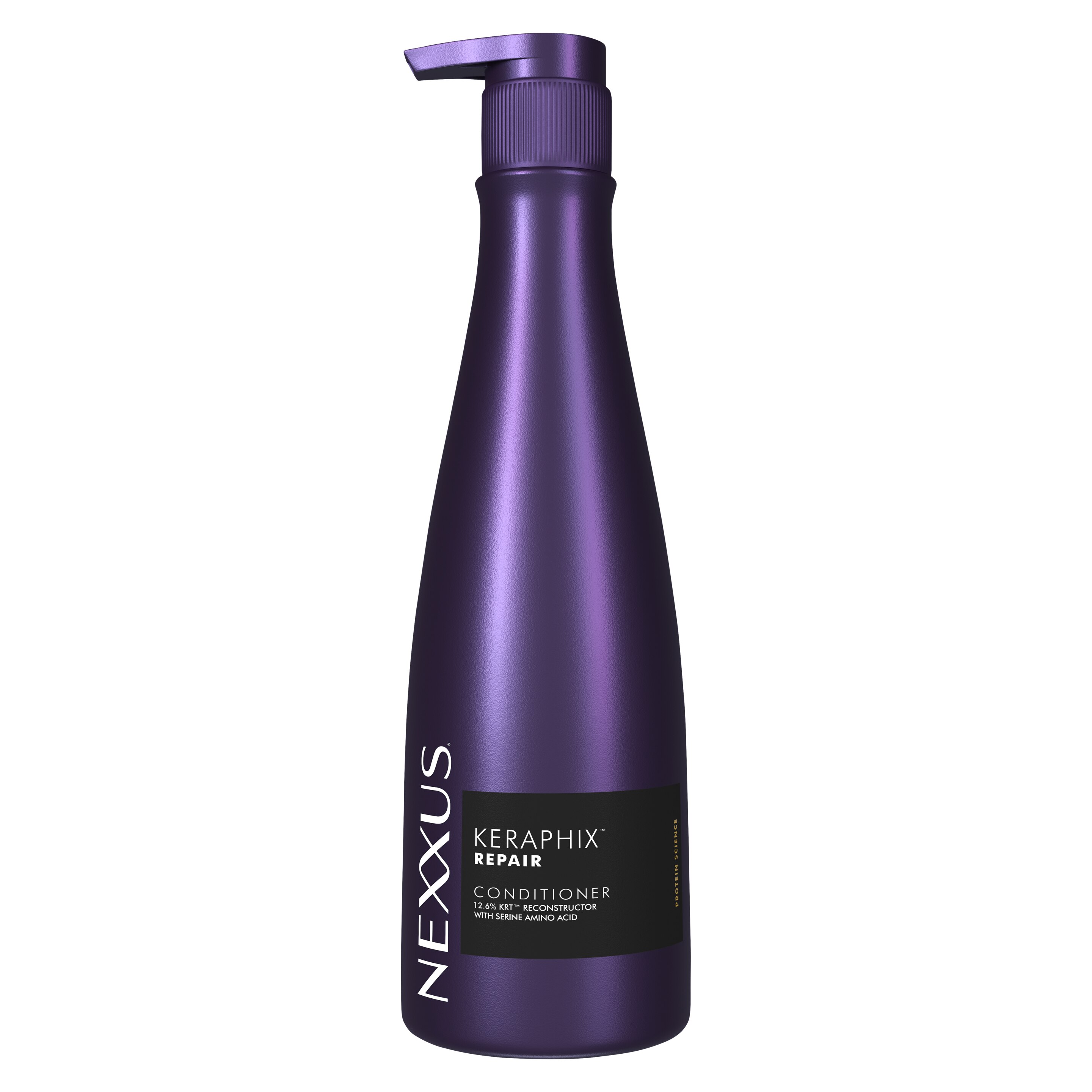
KERAPHIX™ Damage Repair Conditioner helps nourish hair, targeting damage hot spots with a smart repair technology and a luxurious blend of glycerin and cuticle actives, improving softness and manageability without weighing hair down.
Step 3: Use a Weekly Hair Mask
A weekly hair mask for dry hair can help reinforce rough, brittle areas while supporting moisture retention and flexibility. This becomes especially useful when hair feels stiff, dry, or rough even after regular conditioning.
For moderate damage, use hair mask at home for damaged hair once or twice weekly. More severely compromised hair may benefit from more frequent treatments, or using a mask instead of a conditioner, depending on its condition.
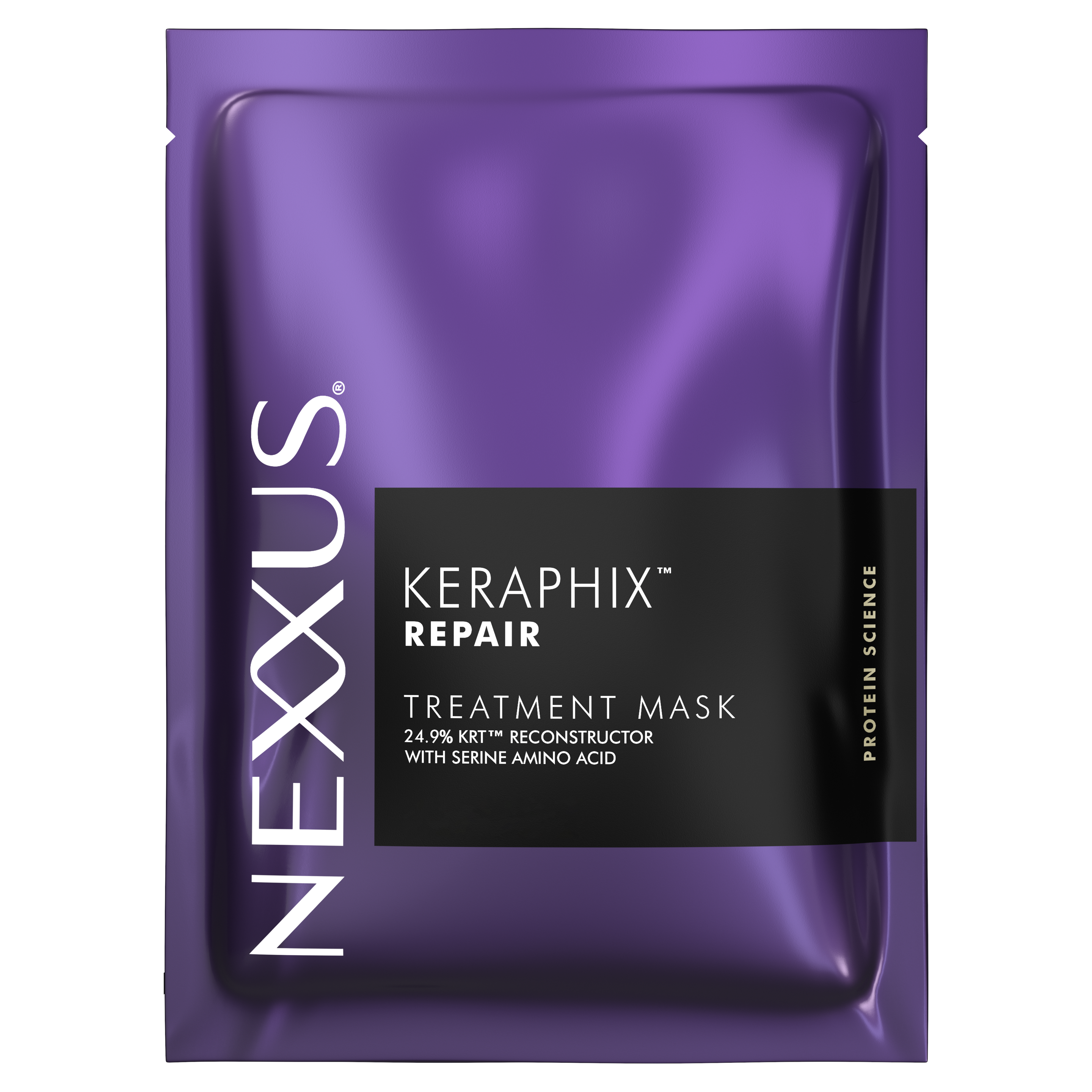
The Keraphix Damage Repair Mask works both inside and outside the hair fiber to help treat brittleness and roughness for smoother, revived hair. The formula should be left on for 3–5 minutes after shampooing to allow better penetration through damaged areas of the cuticle.
Step 4: Protect Hair With Leave-In Bond Repair
Damage does not stop between wash days. Brushing, styling, UV exposure, humidity and friction continue placing stress on weakened fibers daily.
The Keraphix Liquid Crystallizer is a lightweight, but powerful bond repair leave-in treatment, powered by 19.3% KRT technology with liquid crystal serine amino acid, it reconstructs bonds from cuticle to cortex while keeping hair feeling weightless and fluid.
The formula also provides heat protection up to 450°F, helps detangle hair more easily, and delivers weightless hydration without build-up. In a consumer panel study, 100% of users agreed that the regimen left hair feeling smooth after use*.
* Based on consumer panel study 7/29/25 with 49 women when using Keraphix Shampoo, Conditioner + Liquid Crystallizer treatment
Pro tip: For anyone dealing with persistent frizz and roughness, this kind of daily protection can make a major difference as part of a long-term hair treatment for dry frizzy hair routine.
How to Repair Damaged Hair Fast at Home
Visible improvements can happen relatively quickly when damaged hair receives the right combination of protein support, moisture balance and daily protection. Long-term structural repair, however, depends heavily on consistency and reduction of ongoing damage.
Daily habits that can prevent further damage
If you are wondering how to repair damaged hair at home fast, the answer is usually less about a single miracle treatment and more about reducing repeated stress while consistently reinforcing weakened hair structures.
Small daily habits can have a surprisingly large impact on long-term hair health.
- Reduce hot tool frequency where possible
- Use lower heat settings during styling
- Detangle from the ends upward to reduce tension
- Avoid over-washing hair
- Sleep on silk or satin pillowcases to reduce friction
- Trim split ends regularly
- Rough dry hair partially before blow-drying instead of concentrating direct heat on soaking-wet strands
- Avoid one-temperature styling tools that may run hotter than necessary
These habits help support healthier cuticles and reduce ongoing protein degradation, especially when paired with a targeted damaged hair treatment routine.
How to Take Care of Severely Damaged Hair
Severely damaged hair is often victim to deeper structural weakening, increased porosity and significant elasticity loss. Recovery routines should focus on reducing additional stress while consistently supporting internal strength and moisture balance.
When your hair needs intensive repair
Hair that needs more intensive support may show signs like:
- Hair stretching excessively without bouncing back
- Persistent breakage during brushing or styling
- An overly soft texture when wet
- Roughness that returns quickly after conditioning
- Increased tangling and poor manageability
Did you know? Hair that feels overly soft, or unusually stretchy when wet is often a sign of structural weakening inside the cortex due to over-processing. When internal bonds become compromised, the fiber struggles to maintain its normal resilience and shape retention.
Intensive Recovery Routine
More compromised hair usually responds best to hair treatments that heal damaged hair by focusing on low manipulation and ongoing structural support.
That may include:
- Bond-building treatments
- Balanced protein and moisture support
- Heat-free recovery periods
- Protective or low-tension styling
- Reduced brushing and friction
The Nexxus Keraphix™ collection is specifically designed for severely damaged hair affected by bleaching, coloring, heat styling, and mechanical stress. Powered by KRT Keratin Resistance Therapy with serine amino acid, the system helps reinforce weakened structures from cuticle to cortex while supporting smoother, stronger, more resilient hair over time.
Learn more about how Keraphix helps repair damaged hair.
FAQs
How often should I use a hair mask for damaged hair?
Most moderately damaged hair benefits from using a repair mask once or twice weekly. More severely compromised hair may benefit from more frequent use or in place of conditioner, especially after excessive bleaching, coloring, or heat styling.
What is the difference between a protein treatment and a moisturizing mask?
Protein-strengthening treatments help reinforce weakened hair structures and support elasticity, while moisturizing masks primarily focus on hydration and softness. Many advanced repair systems combine both approaches to support stronger, smoother hair.
What shampoo and conditioner are best for damaged hair?
The best systems for damaged hair help support both moisture balance and structural repair. Protein-care and bond-repair focused collections like NEXXUS KERAPHIX™ are designed to help reinforce weakened fibers while improving softness and manageability.