
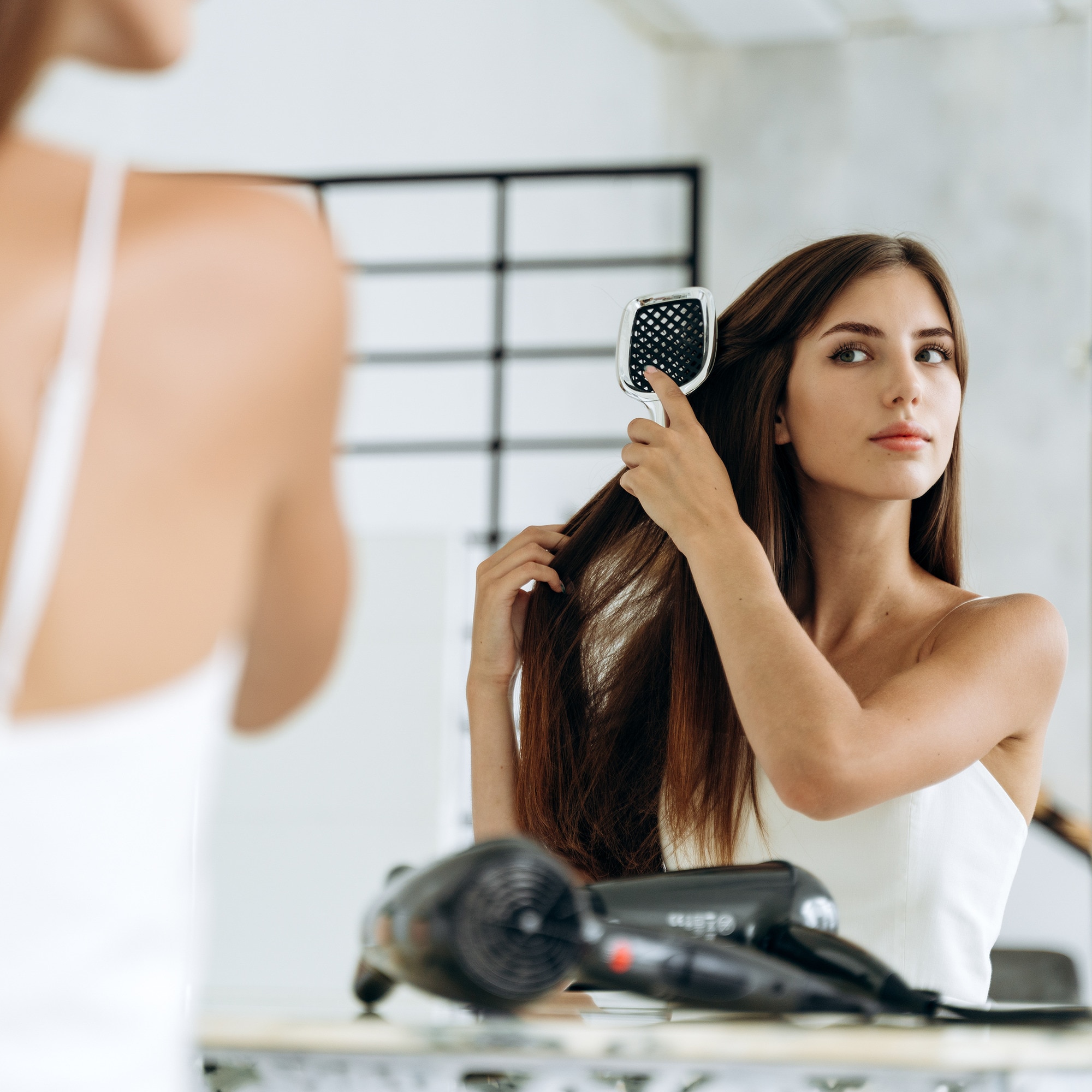
Heat is the fastest way to transform your hair, but also one of the quickest ways to damage it. Kevin Mancuso, celebrity hairstylist, certified trichologist and NEXXUS® Formulation Co-Creator, shares how to protect your hair from heat damage without giving up the styles you love.
Your hair is like a precious fabric and it needs to be handled with that same care. You wouldn't drag a stiff brush through a pashmina scarf or press a hot iron on it. Yet that's more or less what most of us do every morning — dryer pressed right up against the hair, moving fast, heat cranked all the way up. I've seen it up close, in salons and on shoots, and you can smell it: that unmistakable scent of hair burning.
Heat doesn't just sit on the surface of the hair. When you push a tool to its highest setting to force a shape in one pass, you cause instant denaturation. You're melting the hair's internal protein spring and destroying its ability to bounce back. Before it reaches that point, you'll usually feel it coming: hair becomes harder to manage, tangles more easily and stops responding the way it used to when you brush or style it. That's a structural change. So before we get into how to actually minimize heat damage, let's look at what heat is really doing.
How heat damages hair: the science of thermal protein loss
Every time you wet your hair, you break down its hydrogen bonds. They come back together on their own. But a lot of stress gets put on those bonds every time you iron or blow dry, because now they're open and exposed in the styling process. Over time, they fatigue. And once that happens, the bonding and shaping your hair does naturally starts to break down.
The warning signs
The clearest sign is breakage. With a curling iron or flat iron especially, you get that denting and burning, and it shows up as breakage spots across the hair. I've seen it across so many clients' hair.
There's a simple test for it too. Try stretching a strand. If it stretches like wet chewing gum, or snaps with no spring back at all, the internal scaffold is fractured.
The other thing to watch for is over-dried hair that won't hold a shape the way it should. When you push the heat too hard, you end up dehydrating the hair and you're left a style that won’t last.
What temperature should you style at?
Lower than you think. Some people can style around 200, 250 or 300°F, but the rule of thumb is: the more damaged your hair, the lower the heat. As a rough guide, fine hair needs less heat, thicker hair can take more, and the curliest textures need the most when you're straightening. But please don't crank a tool all the way up to 450°F.
What styling products protect hair from heat damage?
It's not just about picking one product. It's about creating a system built to protect the hair and set it up to resist damage. You start with a good foundation, a treatment that gives back to the hair, and then you build your protective styling products on top. That way you're constantly replacing what heat and styling are going to deplete.
Start with a reconstructive treatment
The first thing I reach for is the Keraphix™ Liquid Crystallizer. My clients are all obsessed with it, and not just the ones with damaged hair. You put a little in and it just slips right through, no catching or snagging.
But it's doing more than just smoothing the surface. I use it because I want another level of treatment working under the surface, and the Crystallizer has the ability to rebuild bonds at every level. Even when you're putting hair through a disruptive style and drying it, you're getting better bond strength every time.
A quick word on applying it: You want damp hair, never wet, never dripping. When you come out of the shower, really blot the water out with a towel first because if you work anything into soaking wet hair it just slides off onto the floor, and the Crystallizer is the last thing you want to waste. If your hair is very tangled, take a small amount, touch it on the ends, and brush it through before you do anything else.
Choose your format: spray, cream or foam
Once your treatment is in, the format you reach for depends on the style you're after and your hair type.
If your style needs something a bit richer, go for the MVP Styler™ cream. What sets it apart is that it doesn't just care for the style, it cares for the structure. It smooths the cuticle, protects from heat, reduces friction and helps maintain the hair's integrity through every pass of the brush, dryer or iron. You can use it in a lot of ways: work it in and diffuse to capture your wave and curl, or blow dry with it, straight or into a voluminous blow-out, or transfer it into a Velcro roller set. It suits pretty much everyone from medium-fine hair up through curly, coarse and thick hair. It's also the one I'd reach for with a flat iron. The heat presses and holds the new shape, but the MVP is what sets it and holds it in place.
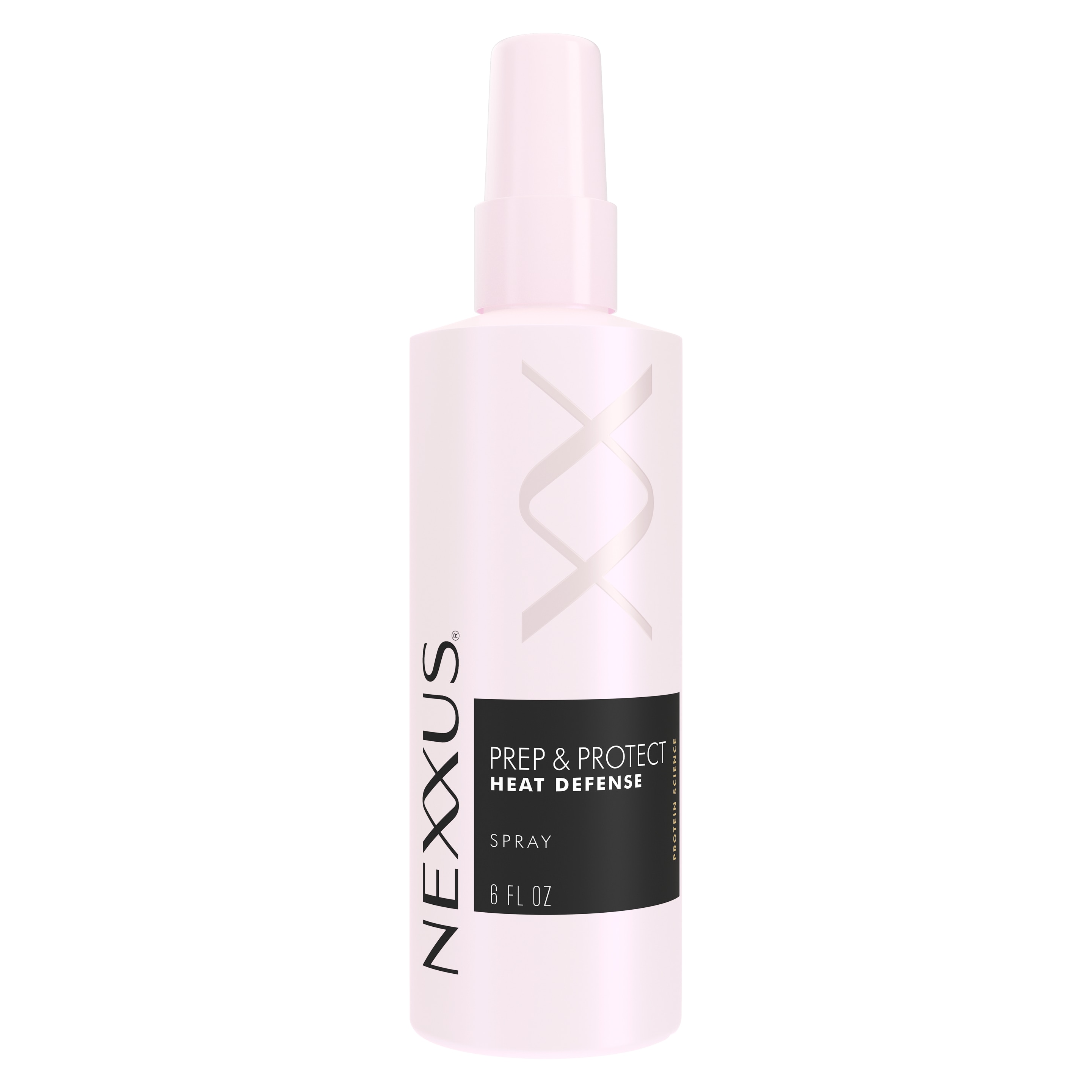
If you want the lightest possible feel, something simple but still protective, reach for a thermal spray like the Prep & Protect. You get nice brush glide through the blow dry, and you're covered if you move on to a curling iron or flat iron afterwards.
And if you're on the finer end and after a bit of volume, try the HY-VOLUME™ foam. It's made for finer hair.
The right way to blow-dry and heat-style
Prep
We've covered most of this already, but to recap: your treatment and heat protectant need to be applied to hair at that damp stage, never wet. Split it into about four sections and detangle gently with a brush before you go near a hot tool. Then you're ready to dry.
Blow-dry
Firstly, slow down. It might take a little more time, but it's worth it. Work in small sections. They dry faster and take far fewer passes, which means less physical stress on the hair.
Keep the dryer at a 45-degree angle, always in the direction hair grows. That's what gives you a less frizzy result with fewer flyaways. And keep the dryer moving. What I see constantly is people getting the dryer right up against the hair and holding it there. Move quickly enough that you're never resting the heat in one spot. And be gentle.
The thing that makes that possible is turning the heat down, and the force of the air down too. Then you don't have to move as fast.
Hot tools
Plenty of people have moved on from a traditional flat iron to thermal brushes and other newer styling tools and that's often the gentler choice, since a lot of that hardware is designed to run at lower heat. But if a flat iron or curling wand is still part of your routine, keep it gentle: prep with your thermal protection first, lower the heat and keep the iron moving. One little backward move and you've got a dent, and that denting and burning is exactly where I see breakage show up.
In the end, the gentler you are with your hair, the more you protect the investment you've made in it. You could be using the best shampoos, conditioners and treatments, but if you tear through it with heat, you will be undoing your own effort. Take your time, and you'll be rewarded with hair that feels balanced and moves naturally, and a style that lasts.
FAQs
What is the best heat protection for hair styling?
The best heat protection is a product applied before styling that shields hair from high tool temperatures while helping maintain its protein structure. For everyday blow-drying, a lightweight heat-protectant spray is the simplest option: NEXXUS® Prep & Protect Heat Defense Spray, powered by STYLEPROTECT™ Technology, protects against blow dryers and irons up to 450°F. For more damaged hair, a reconstructive leave-in such as NEXXUS® Keraphix™ Liquid Crystallizer adds a treatment layer while also offering 450° heat protection, and the MVP Styler™ cream suits styles that need more hold.
How can I use a hair straightener safely without burning my hair?
There's no completely risk-free way to flat-iron, but you can reduce damage by keeping the heat moderate, moving slowly and always protecting the hair first. Apply a heat protectant before you start, work in small sections, and keep the iron gliding rather than pausing, since resting it in one spot is what causes the denting and scorching that leads to breakage. Lower the temperature for finer or damaged hair and avoid passing over the same section repeatedly.
What temperature should I set my flat iron or curling wand to?
Lower than you might expect: many people can style well between roughly 200°F and 300°F, and there's rarely any need to go near a tool's maximum of around 450°F. Finer or more damaged hair needs less heat, while thicker, coarser hair can handle a little more. If your tool doesn't display a number, aim for a low-to-medium setting.
Do I apply heat protectant spray to wet or dry hair?
It depends on the product, but most heat-protectant sprays can be applied to damp or dry hair before heat styling. NEXXUS® Prep & Protect Heat Defense Spray can be used on wet or dry hair, sprayed from root to tip and combed through before styling.
Featured Products


- slide 1
- slide 2
- slide 3
- slide 4