

Kevin Mancuso is a celebrity hairstylist, certified trichologist and NEXXUS® Formulation Co-Creator who has spent decades working with some of the biggest names in the business. Few can match his understanding of hair structure and how to care for it. Here, he breaks down why salon color fades and exactly how to keep it looking freshly done long after you've left the chair.
When you first color your hair, there’s always that honeymoon period when you look in the mirror and the color looks glorious. The catch is that it only stays looking that good if you care for it properly. And that involves protecting the hair structure, starting with the cuticle.
I've never loved the old "shingles on a roof" way of describing the cuticle. I think of those cuticle layers as a set of clear, flexible glass louvers — the windows to the color underneath. When they're intact, they're durable and reflect light, and that's what gives you that natural shine. When coloring goes unprotected, that glass gets scuffed and chipped, the louvers stop reflecting light and your color instantly looks muted.
But the cuticle is only the outer shell. The color itself lives deeper, in the cortex, and the damage from coloring goes all the way down. So caring for color can never be just about the surface. It has to be holistic, working through the whole fiber from the cuticle down to the core. That's what actually keeps color locked in and looking brilliant.
What happens to your hair during a color service
I want you to stop thinking about hair color as paint. It isn't something you brush onto the outside of the strand. It's an architectural overhaul of the whole fiber.
Here's what's actually happening. First, an alkaline agent (usually ammonia) forces the protective outer cuticle to swell and lift open. That creates a gateway into the inner core of the hair. Your hair has three layers: the cuticle, the outer protective shell; the cortex, the inner core where your natural pigment and color live; and the medulla, the deep center. Coloring has to get past the cuticle and into the cortex, which is where the real change (and the real damage) happens.
Then, hydrogen peroxide goes in to clear out your hair's natural melanin. While it's lifting your pigment, it's also attacking and degrading the hair's own keratin proteins. That's the most damaging part of the process. And finally, microscopic, colorless dye molecules slip inside, react with the peroxide, and swell up into complex color molecules that get permanently locked into the hair.
The way I explain it to my clients is this: think of the cortex as a house made of protein, and the new dye molecules as the furniture. When the coloring process degrades that protein structure, you've blown out the walls, and now the furniture has nothing to hold onto. It'll slip right out the next time you wash it.
The lighter you go, the more destructive the process. If you've got black hair and you're going a few shades lighter, you're already changing the hair quite a bit. But if you're going blonde? Now you're talking about multiple processes, and that's when you take out the wrecking ball and the bulldozers and completely renovate.
Water is the culprit: why hair color fades
This is what most people get wrong about fading. They blame their shampoo or water pressure. But scientifically, water itself is the primary culprit.
Water is a plasticizer. It swells the fiber. The minute it hits your hair, the cuticle opens up and the dye molecules are suddenly free to rinse out. When your color's fresh, there's a big population of them, so you'll always see a little wash-out at first. That part's normal. But the longer your hair stays wet, the more it expands, and the wider you're holding those pathways open. Add hot water and you've poured fuel on it: the fiber swells fast and aggressively, and you've basically built the dye molecules a direct highway out of the cortex. A swollen hair fiber is a compromised hair fiber.
This is where a healthy cuticle earns its keep. When it's intact, it doesn't swell open as easily, so water can't flood in and color can't rinse out the way it does on damaged hair. If you keep that outer layer sealed and smooth, your color holds on far longer.
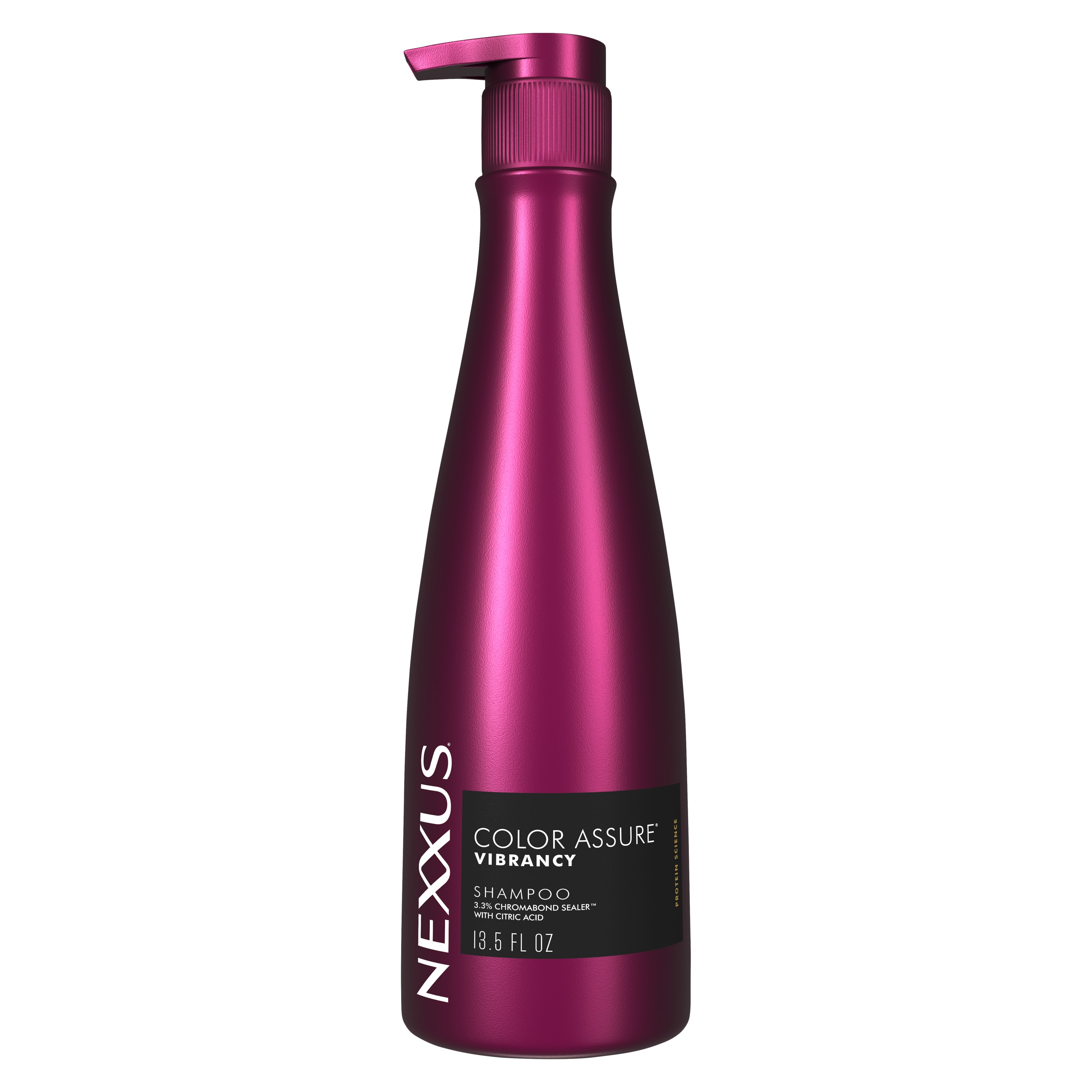
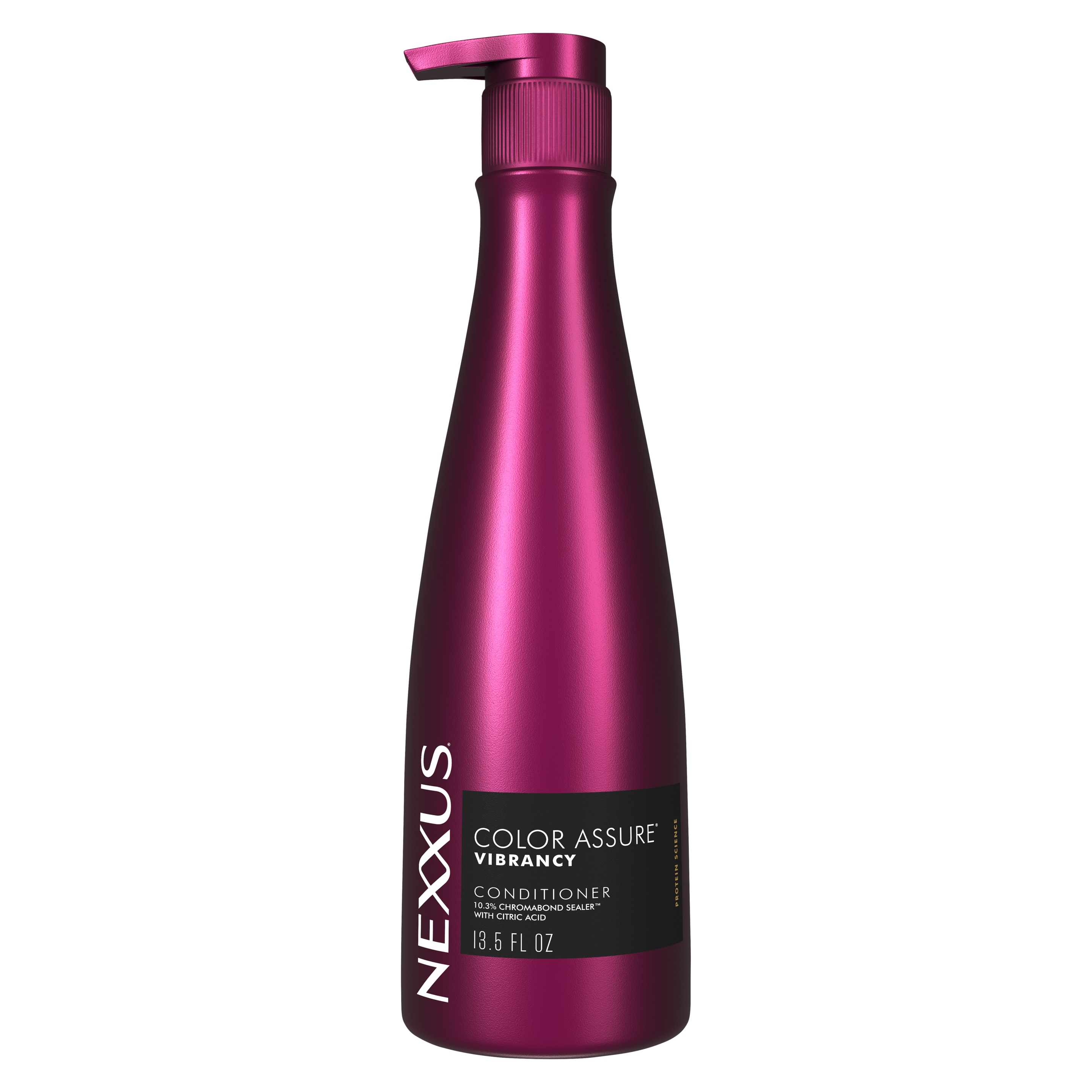
That's exactly what a color-safe system like NEXXUS® Color Assure® is built to do. Used together, the shampoo and conditioner help keep the cuticle sealed and leave a water-repellent layer on the hair, so less water gets in and less color leaches out every time you wash. And it's not only about products. The less time your hair spends soaking wet and swollen, the less color escapes.
The three big accelerators: over-washing, rough handling and heat
If you asked me to name the things doing the most damage to your color between salon visits, I'd start with over-washing. Or really, washing it without protecting it first. I'm a big proponent of washing hair, don't get me wrong. But if you're not taking the steps to keep the fiber moisturized and replenished, then every wash costs you. When you've used a pre-treatment followed by a protective shampoo, the water can't do as much damage.
The second is rough handling – being aggressive with your hair. Remember those glass louvers? Every rough pass with a hairbrush or comb etches them a little more.
And the third is heat styling. Heat causes the dye molecules to dry out, crack, and fall away because the hair's gone brittle. At extreme heat, you get instant chemical denaturation. Which means you're literally melting the hair's internal protein spring and permanently destroying its ability to bounce back.
When it comes to heat, less is more. Dryers have gotten far more sophisticated and lower heat with a gentler hand is genuinely better. As a rough guide, fine hair needs less heat, thicker hair can take more, and the curliest textures need the most when you're straightening. But there's no reason to crank a tool all the way up to 450. And whatever tool you're using, always prep with a heat protectant.
And I'll sneak in a fourth, because people always forget it: UV. Sun exposure changes the dye molecules and the proteins in your hair. It'll shift both your natural and synthetic color. The fix is simple. Wear a hat or carry an umbrella. I live in DC now, and I see so many women walking around with umbrellas in the heat. They've got the right idea.
What products do salons use for color-treated hair?
The right products care for the whole fiber, which, going back to that wrecking ball, is exactly what got torn down to make room for your color in the first place.
I've worked with NEXXUS® for years, and Color Assure® is one of the products I've worked on since I started with the brand. It was developed specifically for color-treated hair and the idea behind it is to keep the whole fiber strong, so your color holds on longer. It's a three-part system, a shampoo, conditioner and mask, and it's lightweight, so it cleanses without weighing the hair down while still working on that deeper level.
Matching care to your hair
Not every color routine is the same. It all depends on how much damage you're dealing with. If your hair is color-treated and in decent shape, then it needs a lightweight, color-safe system that maintains the whole fiber. But if your hair is bleached, we're talking about severe damage and that's a different job. That's reconstruction, not maintenance. That's where something like Keraphix™ comes in, going beyond bond repair alone to rebuild the fiber from cuticle to core.
| If your hair is | What to look for | Try |
|---|---|---|
| Color-treated and just needs upkeep | A lightweight, sulfate-free shampoo and whole-fiber protein care | Color Assure® Vibrancy Collection |
| Bleached, severely damaged or breaking | Reconstructive repair | Keraphix™ Damage Repair Collection |
Why your ends fade first
Your color doesn't fade evenly and porosity is a big reason why. Porosity partly comes down to your natural texture but a color service raises it. The process lifts and roughens the hair cuticle, and every gap it leaves is another way in and out for color.
Your ends are almost always the most porous part. You can feel it: they're drier and more damaged. So if you put even a temporary color on, it grabs at those porous ends and bounces off the areas that are still intact and resistant. That's also why your ends fade first.
The fix is to treat those areas differently. Especially with color, I'll have clients wet the hair, put the mask on the porous areas first, then shampoo, then repeat the mask to bring the porous parts back into balance with the rest.
Your at-home color maintenance routine
Pre-treat & wash
If your hair is damaged, or you're holding onto a rich color like a red or brown, don't shy away from putting a mask on first, before washing. In fact, doing a mask every time you wash doubles as a pre-treatment. That protection is living on the hair before the water even hits it, because it leaves a protective film on the hair. Some people prefer an oil or a serum for this.
When you shampoo, focus on your roots. The rest of your hair honestly isn't that dirty, and it doesn't take much to clean the lengths.
Treat & condition
People get scared that a hair mask is going to pull their color out. It won't. That's not what it's designed to do. A good mask is built to protect the color and keep it safer, by supporting and maintaining the hair's structure rather than stripping it.
Use it every time you wash, if your hair needs it, or once a week if that suits you better. When you do, give it three minutes at the very least. Plenty of people leave it on for five or ten minutes, or pop it in and go do something around the house before rinsing.
My routine is shampoo, mask, rinse it all out, then work in a small amount of conditioner and give it a light rinse. If your hair is on the thicker, curlier, more textured side, you'll benefit from leaving a little conditioner behind instead of rinsing it all out.
If you take one thing from all of this, it's that maintaining the structural integrity of the hair is what matters the most. Everything else follows from that. And the good news is, it's a pretty durable structure. Care for it well, be gentle with it, use detangling brushes, lean on a good mask, and your color will hold on a lot longer than you'd think.
FAQs
What do salons use for color treatments to prevent fading?
Salons use regimens made specifically for color-treated hair. NEXXUS® Color Assure® is a great example: a three-part system (shampoo, conditioner and mask) that's lightweight enough to cleanse without weighing hair down, while protecting color between washes.
How can I maintain my professional salon hair color at home?
At home, it comes down to protecting the hair around every wash. Choose products designed for color-treated hair. Wash mainly at the roots, where hair actually gets dirty, so the lengths don't get stripped. Cooler water beats hot, since hot water swells the fiber and lets color escape. A protective hair mask, gentle brushing and protection from heat and UV will also help.
Why is my color-treated hair feeling dry and looking dull?
Color-treated hair usually looks dull because coloring and daily wear roughen the cuticle, the hair's outer layer. A smooth cuticle reflects light and looks shiny, but a scuffed one scatters light, so color appears muted even before it has actually faded. Dryness tends to concentrate at the ends, which are almost always the most porous and lose moisture and color the fastest. Smoothing and protecting the cuticle, and conditioning the porous ends, is what restores shine and depth.
How does the NEXXUS® Color Assure® system keep hair color vibrant?
Color Assure® is an anti-fade system built around CHROMABOND SEALER™ technology, which targets the main reason color fades: pigment escaping the hair when it gets wet. It uses citric acid to hold the hair at an acidic pH that closes the cuticle, working alongside an ionic sealing complex that locks color molecules and seals the cuticle barrier, so color doesn't diffuse out on contact with water. Sealing that surface also leaves it smooth and reflective, which is what keeps color looking shiny and vibrant. The system protects color vibrancy for up to 40 washes.
Featured Products


- slide 1
- slide 2
- slide 3
- slide 4